
Published August 13, 2024
How the Economy Impacts Mortgage Rates



As someone who’s thinking about buying or selling a home, you’re probably paying close attention to mortgage rates – and wondering what's ahead.
One thing that can affect mortgage rates is the Federal Funds Rate, which influences how much it costs banks to borrow money from each other. While the Federal Reserve (the Fed) doesn’t directly control mortgage rates, they do control the Federal Funds Rate.
The relationship between the two is why people have been watching closely to see when the Fed might lower the Federal Funds Rate. Whenever they do, that’ll put downward pressure on mortgage rates. The Fed meets next week, and three of the most important metrics they’ll look at as they make their decision are:
- The Rate of Inflation
- How Many Jobs the Economy Is Adding
- The Unemployment Rate
Here’s the latest data on all three.
1. The Rate of Inflation
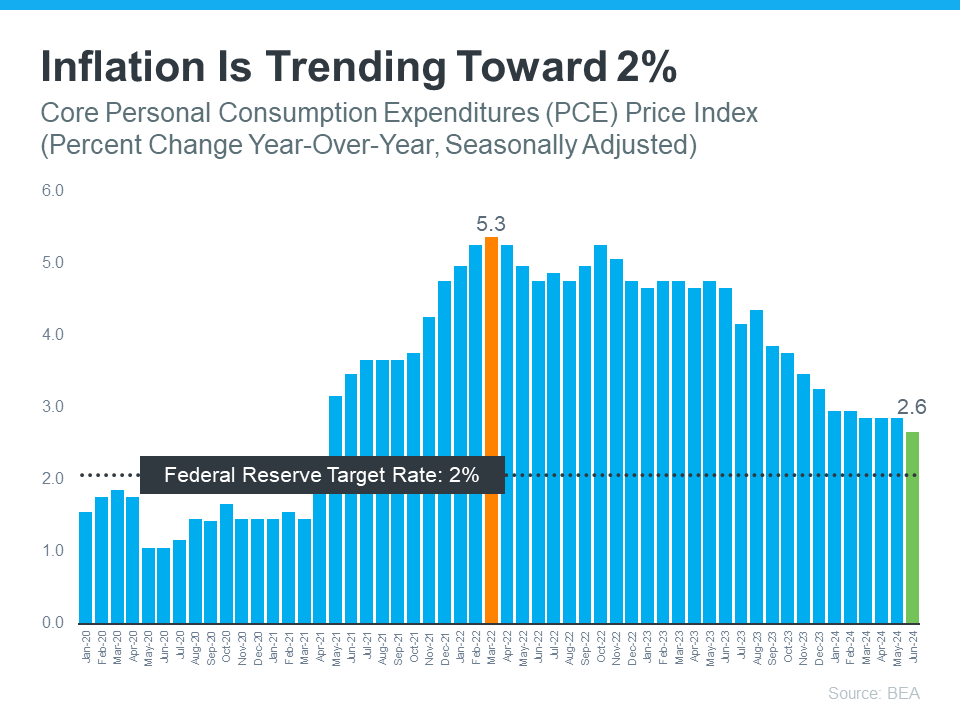
You’ve probably heard a lot about inflation over the past year or two – and you’ve likely felt it whenever you’ve gone to buy just about anything. That’s because high inflation means prices have been going up quickly.
The Fed has stated its goal is to get the rate of inflation back down to 2%. Right now, it’s still higher than that, but moving in the right direction (see graph below):
 2. How Many Jobs the Economy Is Adding
The Fed is also watching how many new jobs are created each month. They want to see job growth slow down consistently before taking any action on the Federal Funds Rate. If fewer jobs are created, it means the economy is still strong but cooling a bit – which is their goal. That appears to be exactly what’s happening now. Inman says:
“. . . the Bureau of Labor Statistics reported that employers added fewer jobs in April and May than previously thought and that hiring by private companies was sluggish in June.”
So, while employers are still adding jobs, they’re not adding as many as before. That’s an indicator the economy is slowing down after being overheated for quite some time. This is an encouraging trend for the Fed to see.
3. The Unemployment Rate
The unemployment rate is the percentage of people who want to work but can’t find jobs. So, a low rate means a lot of Americans are employed. That’s a good thing for many people.
But it can also lead to higher inflation because more people working means more spending – which drives up prices. Right now, the unemployment rate is low, but it’s been rising slowly over the past few months (see graph below):
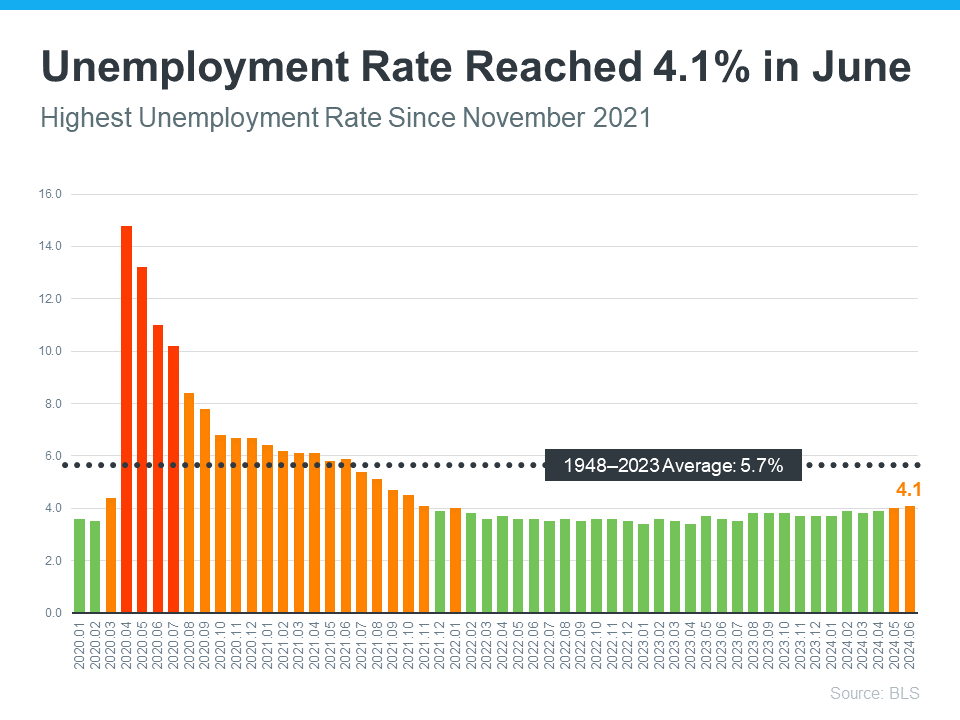 It may seem harsh, but a consistently rising unemployment rate is something the Fed needs to see before deciding to cut the Federal Funds Rate. That’s because a higher unemployment rate would mean reduced spending, and that would help get inflation back under control.
What Does This Mean Moving Forward?
While mortgage rates are going to continue to be volatile in the days and months ahead, these are signs the economy is headed in the direction the Fed wants to see. But even with that, it’s unlikely they'll cut the Federal Funds Rate when they meet next week. Jerome Powell, Chair of the Federal Reserve, recently said:
“We want to be more confident that inflation is moving sustainably down toward 2% before we start the process of reducing or loosening policy.”
Basically, we’re seeing the first signs now, but they need more data and more time to feel confident that this is a consistent trend. Assuming that direction continues, according to the CME FedWatch Tool, experts say there’s a projected 96.1% chance the Fed will lower the Federal Funds Rate at their September meeting.
Remember, the Fed doesn’t directly set mortgage rates. It’s just that whenever they decide to cut the Federal Funds Rate, mortgage rates should respond.
Of course, the timing of when the Fed takes action could change because of new economic reports, world events, and other factors. That’s why it's usually not a good idea to try to time the market.
Bottom Line
Recent economic data may signal that hope is on the horizon for mortgage rates. Let’s connect so you have an expert to keep you up to date on the latest trends and what they mean for you.
With everyday expenses adding up and mortgage rates affecting monthly payments, it's understandable if you're wondering whether buying a home right now is the right move.
When the economy feels uncer...
After years of making a house your own, it can be hard to imagine living anywhere else. Maybe you've raised a family there, celebrated important milestones, or built lasting friendships with neighbors...
If you've been following mortgage rate headlines, you've probably seen the Federal Reserve mentioned more than once. And if you're thinking about buying or selling a home in Temecula, you may be wonde...
For many first-time buyers, owning a home can feel like a goal that's always a few years away. Saving for a down payment takes time, and with housing costs competing for space in your budget, it can b...
Higher mortgage rates don't just affect buyers. They can change what it takes to sell a home, too.
When borrowing costs rise, buyers tend to pay closer attention to their monthly payments. Even a rel...
If you’ve been following the headlines about mortgage rates, you may have seen reports that rates have climbed to their highest point since January 2025. For some buyers in Temecula, that news m...
Price cuts are becoming more common in today's housing market, and they can mean very different things depending on whether you're buying or selling a home in Murrieta.
For sellers, a price reduction...
If you’re planning to buy your next home in Murrieta, you’ve probably heard the old rule about saving 20% for your down payment.The truth is, you usually don’t have to. Plenty of loa...

Liz Jones
Realtor & Team Lead | Jones Realty Group | Keller Williams Realty
or another way