
If you’re planning to buy your next home in Murrieta, you’ve probably heard the old rule about saving 20% for your down payment.The truth is, you usually don’t have to. Plenty of loa...
Published August 2, 2022
Happiness Advantage Principle 4

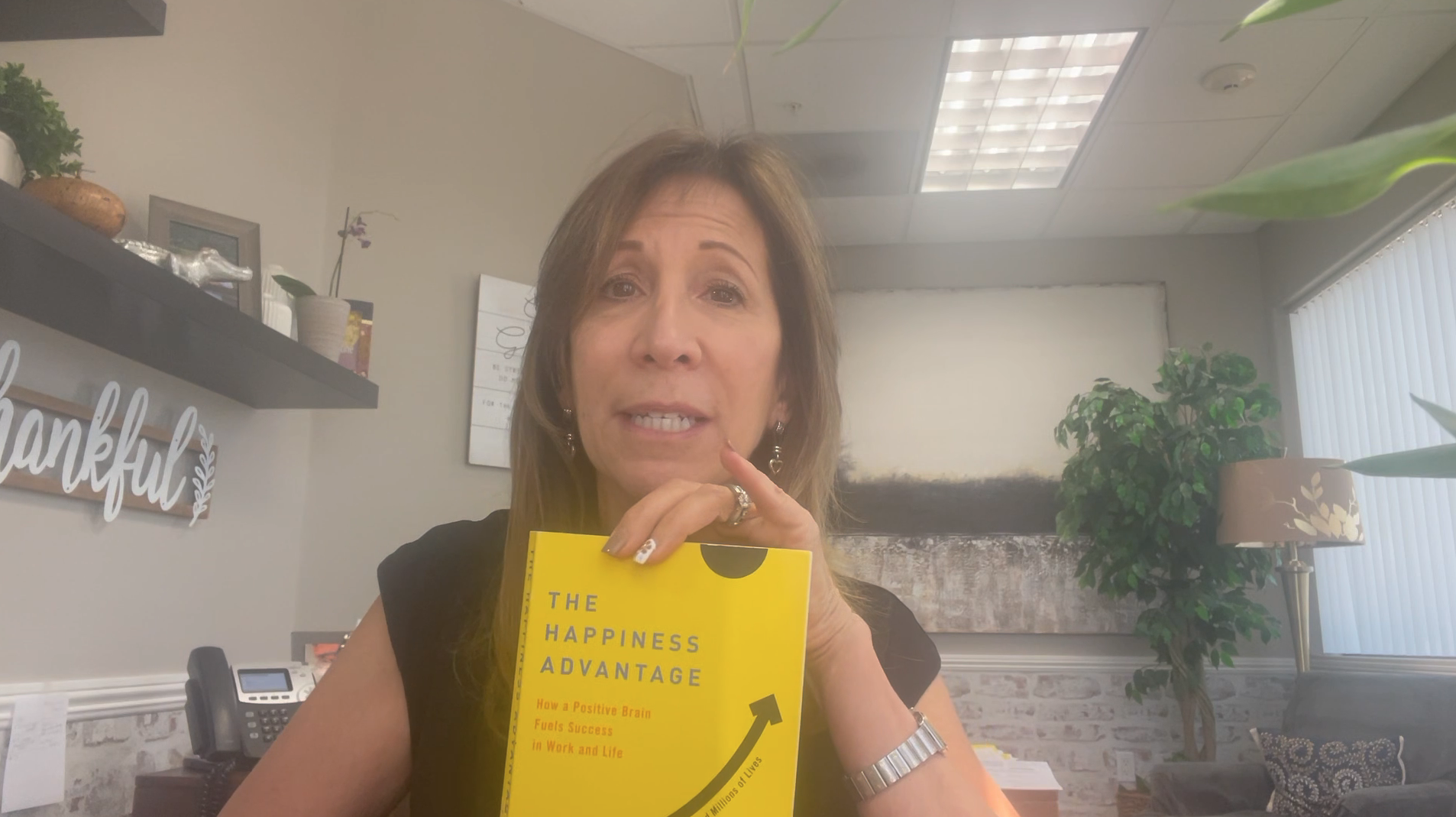
PRINCIPLE #4
Falling Up -- Capitalizing on the Downs to Build Upward Momentum
As an undergraduate, The Psychology Department was constantly offering money for willing research subjects; and since I was almost always short of funds, I was a willing guinea pig for experiments.
The study was three hours long and promised to pay $20. To get things underway, two research assistants handed me a set of bike reflectors with Velcro straps and a pair of tight white biker shorts. “Please attach these reflectors to each of the joints on your body and put on the shorts”.
Then they explained the study: The researchers were examining how the elderly fall to the ground, so that they could eventually help senior citizens avoid injuries. Of course, they couldn’t actually ask the elderly to fall repeatedly for the study, so they recruited college students instead. Made perfect sense to me.
I was told to walk down a padded hallway in the dark while a video camera recorded the position of the reflectors on my joints. As I walked, one of four things would happen: (1) The floor would suddenly slide to the left, and I would crash onto the lightly padded walkway; (2) The floor would suddenly slide to the right throwing off my balance and sending me crashing down to the left; (3) A cord attached to my right leg would be yanked out behind me, pitching me face first onto the walkway; and (4) If none of those things happened by the time I go to the end of the walkway, I was just supposed to throw myself to the ground.
But $20 bucks was on the line, and so for the next hour I fell down once about every thirty seconds. At 120 falls, the research assistants emerged, giggled sheepishly, and admitted they had forgotten to put the video in the recorder. They would need to retape all the falls again. Do you want to proceed?” Again, I said yes.
Another 120 falls later, I was bruised, battered, and exhausted. With all the gear I had on, merely picking myself up off the mats took an enormous amount of energy, and the whole ordeal had taken a painful toll on my body. When I finally stumbled out into the hallway, the research assistants had been joined by a distinguished looking professor, summoned to investigate a major irregularity: The experiment had never lasted this long.
The study, it turned out, had nothing to do with “helping the elderly.” These researchers were actually studying motivation and resilience. They wanted to know: How much pain and discomfort could you put people through before they gave up? How much would a person withstand to get the reward he had set out to get?
Mapping the Way To Success
The human brain is constantly creating and revising mental maps to help us navigate our way through this complex and ever-changing world - kind of like a tireless, overeager cartographer. This tendency has been wired in us through thousands of years of evolution: In order to survive, we must create physical maps of our environment, map out strategies for getting food, and map out the possible effects of our actions. But these maps aren’t just crucial to survival in the wilderness, they are vital to succeeding and thriving in the business world.
On every mental map after a crisis or adversity, there are three mental paths. One that keeps circling around where you currently are (i.e. the negative event creates no change; you end where you start). Another mental path leads you toward further negative consequences (i.e. you are far worse off after the negative event; this path is why we are afraid of conflict and challenge). And one, which I call the Third Path, that leads us from failure or setback to a place where we are even stronger and more capable than before the fall. In a crisis, economic or otherwise, we tend to form incomplete mental maps, and ironically the path we have trouble seeing is often the most positive, productive one. In fact, when we feel helpless and hopeless, we stop believing such a path even exists – so we don’t even bother to look for it. But this is the very path we should be looking for, because, as we’ll see, our ability to find the Third Path is the difference between those we are crippled by failure and those who rise above it.
Post Traumatic Growth
In today’s society, it’s all too easy to overlook the Third Path. Bereavement, bone marrow transplantation, breast cancer, chronic illness, heart attack, military combat, natural disaster, physical assault, refugee displacement. If this reads like a random clip from an alphabetized nightmare list of the very worst things that can befall us, that’s because it basically is. But it also happens to be a list of events that researchers have found to spur profound positive growth in many, many individuals. Psychologists have termed this experience Adversarial Growth, or Post-Traumatic Growth, to distinguish it from the better known term Post-Traumatic Stress.
So, what distinguishes the people who find growth in these experiences from those who don’t? There are a number of mechanisms involved, but not surprisingly, mindset takes center stage. People’s ability to find the path up rests largely on how they conceive of the cards they have been dealt, so the strategies that most often lead to Adversarial Growth include positive reinterpretation of the situation or event, optimism, acceptance, and coping mechanisms that include focusing on the problem head on (rather than trying to avoid or deny it). As one set of researchers explains, “it appears that it is not the type of event per se that influences posttraumatic growth, but rather the subjective experience of the event”.
“Eureka, We Failed!”
While many of us, thankfully, live lives free of serious trauma, we all experience adversity of one kind or another at some point in our lives. Mistakes. Obstacles. Failure. Disappointment. Suffering. And yet with every setback comes some opportunity for growth that we can teach ourselves to see and take advantage of.
The most successful people see adversity not as a stumbling block, but as a stepping-stone to greatness. Indeed, early failure is often the fuel for the very ideas that eventually transform industries, make record profits, and reinvent careers.
Harvard Business Review points out that the smartest companies even commit errors on purpose, just to spur the kind of creative problem solving that leads to the most innovative ideas and solutions.
It’s for this reason that, however counterintuitive it may seem, psychologists actually recommend that we fail early and often. In his book The Pursuit of Perfect, Tal Ben-Shahar writes that “we can only learn to deal with failure by actually experiencing failure, by living through it. The earlier we face difficulties and drawbacks, the better prepared we are to deal with the inevitable obstacles along our path.”
How the Third Path Gets Hidden
Unfortunately, the path from failure to success is not always easy to spot. In the midst of crisis, we can get so stuck in the misery of the status quo that we forget another path is available.
Right when extra effort was most needed, the people I kept meeting seemed paralyzed, like they had given up.
Crisis As Catalyst
Fortunately, just as personal crises can provide the foundation for positive individual growth, so can economic ones. They often propel companies to greater success, and many business juggernauts of the twentieth century - Hewlett-Packard and Texas Instruments among them - were actually launched during the Great Depression. Similarly, America’s top companies have often used recessions to re-evaluate and improve their business practices. One company president admitted that going through a recession had actually proved invaluable: “We found all sorts of revisions we could make to improve our operation. Now these revisions work so well we wouldn’t go back to the old way of doing things even if the recession ended tomorrow”.
The best leaders are the ones who show their true colors not during the banner years, but during such times of struggle.
On the other hand, leaders who find themselves energized by challenge and motivated by failure reap all kinds of amazing rewards.
The point is that when faced with obstacles or failure, succumbing to the helplessness keeps us down on the mat, while looking for the path of opportunity helps us pick ourselves up.
Learn Your ABCD’s
Of course, turning adversity into opportunity is a skill that comes more naturally to some people than others. Some people already have an optimistic explanatory style.
One way to help ourselves see the path from adversity to opportunity is to practice the ABCD model of interpretation: Adversity, Belief, Consequence, and Disputation. Adversity is the event we can’t change - it is what it is. Belief is our reaction to the event - why we thought it happened and what we think it means for the future. Are there ready solutions, or do we think it is unsolvable? If we believe the former – that is, if we see the adversity as short-term or as an opportunity for growth, or appropriately confined to only part of our life – then we maximize the chance of a positive Consequence. But if the Belief has led us down a more pessimistic path, helplessness and inaction can bring negative Consequences. That’s when it’s time to put the D to work.
Disputation involves first telling ourselves that our belief is just that – a belief, not fact – and then challenging (or disputing) it. Psychologists recommend that we externalize this voice.
And finally, if the adversity truly is bad, is it as bad as we first thought? This particular method is called decatastrophizing: taking time to show ourselves that while the adversity is real, it is perhaps not as catastrophic as we may have made it out to be.
So the next time you catch yourself feeling hopeless – or helpless – about some snag in your career, some frustration at your job, or some disappointment in your personal life, remember that there is always a Third Path upwards – your only task is to find it.
Follow along next week to see Principle 5 of The Happiness Advantage from Shawn Achor!
If you're thinking about buying a home in Murrieta, there's a good chance mortgage rates are part of the conversation.Maybe you've found homes you like, but you're waiting for rates to come down. Or p...
If you're a homeowner in Murrieta getting ready to make a move, one question usually comes first: Should you buy your next home before you sell your current one, or sell your current home before you s...
Buying a home is an exciting milestone, but it's important to look beyond the purchase price and monthly mortgage payment. One cost that often catches buyers by surprise is homeowners insurance, espec...
Over the past year, you've probably seen plenty of headlines predicting falling home prices and a slowing housing market.
While home price growth did cool compared to the rapid appreciation we experi...
If you've been thinking about selling your luxury home in Temecula, you may be wondering whether now is the right time.
With headlines focusing on higher mortgage rates and a slower housing market, i...
Buying your first home is something you'll probably never forget.
Maybe it was where you celebrated your first holidays as homeowners, brought home a new baby, adopted a dog, or simply enjoyed the pr...
If you've been looking at homes in Murrieta and wondering how anyone is buying right now, you're not alone. With home prices remaining elevated, many first-time buyers are questioning whether homeowne...
If you've been thinking about buying a home over the past few years, you've likely faced two major challenges: rising home prices and limited inventory.
The good news? This summer is bringing some we...

Liz Jones
Realtor & Team Lead | Jones Realty Group | Keller Williams Realty
or another way