
Published September 12, 2024
Are We Heading into a Balanced Market?



If you’ve been keeping an eye on the housing market over the past couple of years, you know sellers have had the upper hand. But is that going to shift now that inventory is growing? Here’s a breakdown of what you need to know.
What Is a Balanced Market?
A balanced market is generally defined as a market with about a five-to-seven-month supply of homes available for sale. In this type of market, neither buyers nor sellers have a clear advantage. Prices tend to stabilize, and there’s a healthier number of homes to choose from. And after many years when sellers had all the leverage, a more balanced market would be a welcome sight for people looking to move. The question is – is that really where the market is headed?
After starting the year with a three-month supply of homes nationally, inventory has increased to four months. That may not sound like a lot, but it means the market is getting closer to balanced – even though it’s not quite there yet. It’s important to note this increase in inventory is not leading to an oversupply that would cause a crash. Even with the growth lately, there’s still nowhere near enough supply for that to happen.
The graph below uses data from the National Association of Realtors (NAR) to give you an idea of where inventory has been in the past, and where it’s at today:
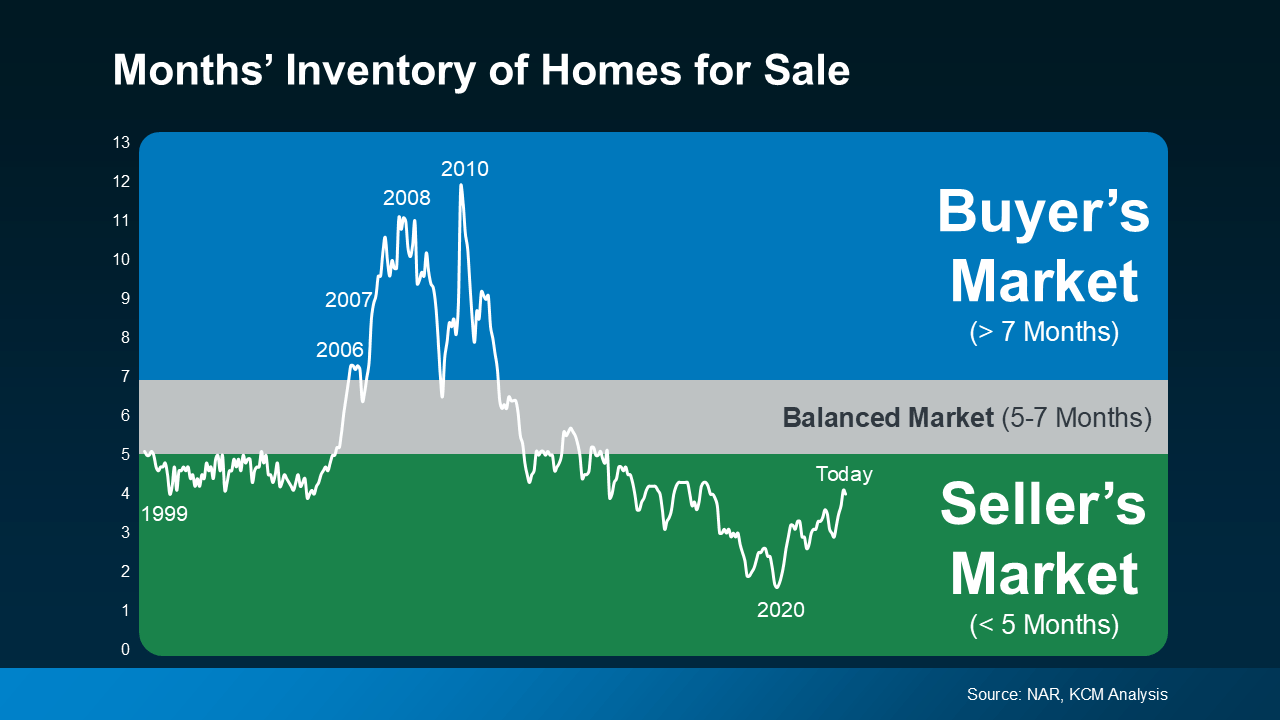 For now, this is still seller’s market territory – it’s just not as frenzied of a seller’s market as it’s been over the past few years. As Mark Fleming, Chief Economist at First American, says:
“The faster housing supply increases, the more affordability improves and the strength of a seller’s market wanes.”
What This Means for You and Your Move
Here's how this shift impacts you and the market conditions you'll face when you move. Lawrence Yun, Chief Economist at NAR, explains:
“Homes are sitting on the market a bit longer, and sellers are receiving fewer offers. More buyers are insisting on home inspections and appraisals, and inventory is definitively rising on a national basis.”
The graphs below use the latest data from NAR and Realtor.com to help show examples of these changes:
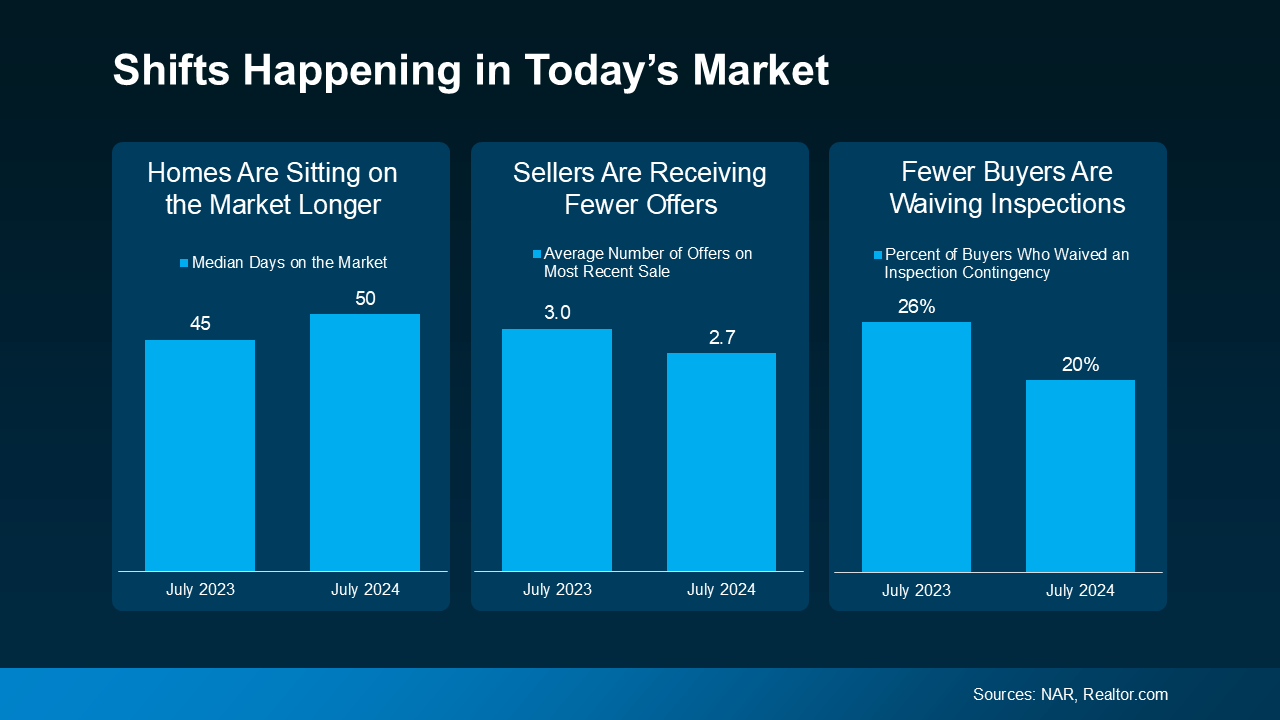 Homes Are Sitting on the Market Longer: Since more homes are on the market, they’re not selling quite as fast. For buyers, this means you may have more time to find the right home. For sellers, it’s important to price your house right if you want it to sell. If you don’t, buyers might choose better-priced options.
Sellers Are Receiving Fewer Offers: As a seller, you might need to be more flexible and willing to compromise on price or terms to close the deal. For buyers, you could start to face less intense competition since you have more options to choose from.
Fewer Buyers Are Waiving Inspections: As a buyer, you have more negotiation power now. And that’s why fewer buyers are waiving inspections. For sellers, this means you need to be ready to negotiate and address repair requests to keep the sale moving forward.
How a Real Estate Agent Can Help
But this is just the national picture. The type of market you’re in is going to vary a lot based on how much inventory is available. So, lean on a local real estate agent for insight into how your area stacks up.
Whether you’re buying or selling, understanding how the market is changing gives you a big advantage. Your agent has the latest data and local insights, so you know exactly what’s happening and how to navigate it.
Bottom Line
The real estate market is always changing, and it’s important to stay informed. Whether you’re buying or selling, understanding this shift toward a balanced market can help. If you have any questions or need expert advice, don’t hesitate to reach out.
With everyday expenses adding up and mortgage rates affecting monthly payments, it's understandable if you're wondering whether buying a home right now is the right move.
When the economy feels uncer...
After years of making a house your own, it can be hard to imagine living anywhere else. Maybe you've raised a family there, celebrated important milestones, or built lasting friendships with neighbors...
If you've been following mortgage rate headlines, you've probably seen the Federal Reserve mentioned more than once. And if you're thinking about buying or selling a home in Temecula, you may be wonde...
For many first-time buyers, owning a home can feel like a goal that's always a few years away. Saving for a down payment takes time, and with housing costs competing for space in your budget, it can b...
Higher mortgage rates don't just affect buyers. They can change what it takes to sell a home, too.
When borrowing costs rise, buyers tend to pay closer attention to their monthly payments. Even a rel...
If you’ve been following the headlines about mortgage rates, you may have seen reports that rates have climbed to their highest point since January 2025. For some buyers in Temecula, that news m...
Price cuts are becoming more common in today's housing market, and they can mean very different things depending on whether you're buying or selling a home in Murrieta.
For sellers, a price reduction...
If you’re planning to buy your next home in Murrieta, you’ve probably heard the old rule about saving 20% for your down payment.The truth is, you usually don’t have to. Plenty of loa...

Liz Jones
Realtor & Team Lead | Jones Realty Group | Keller Williams Realty
or another way